
When Full Houses Are Not Enough, Broadway Has a Bigger Problem
The early closure of CATS: THE JELLICLE BALL is not evidence that audiences have abandoned musicals. It is evidence that Broadway’s economic model is becoming increasingly difficult to sustain.
There was every reason to believe CATS: THE JELLICLE BALL had found its place on Broadway.
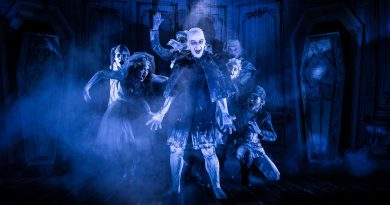
The production transformed Andrew Lloyd Webber’s familiar musical into a queer ballroom competition, giving a decades-old title a vivid new theatrical identity. Critics embraced it. Audiences came. Before the Tony Awards, its weekly grosses were reportedly approaching $1 million. It collected three Tony Awards, even though it missed the crucial prize for Best Revival of a Musical.
Then came the announcement that the production would close on 8 August, after approximately five months on Broadway.
The surprise was not simply that another musical was ending its run. Broadway has always been unpredictable, and far more productions lose money than become long-running successes. What made this closure unsettling was that CATS: THE JELLICLE BALL did not look like a show in immediate trouble.
Its seats were being filled. Its profile was strong. Its artistic reception was enthusiastic.
Yet the production was reportedly unable to generate enough revenue to cover its weekly expenses.
That distinction matters. Broadway’s current problem is not necessarily that people have stopped attending musicals. It is that attendance alone may no longer be enough.
The price of a full theatre
A production can appear successful from the auditorium while struggling behind the scenes.
The number of tickets sold is only part of the equation. The average amount paid for each ticket is just as important. A show may attract a large audience through discounts, promotions and lower-priced seats, but still fail to reach the weekly income required to pay its cast, musicians, stagehands, theatre owners, suppliers and creative personnel.
The closure of CATS: THE JELLICLE BALL exposes the widening gap between popularity and profitability.
That gap has become particularly dangerous for musicals. They usually require larger companies than plays. They may employ orchestras, dance ensembles, dressers, technicians and specialist operators. They also tend to rely on more complicated physical productions, with extensive costumes, scenery, automation, lighting and sound.
All of those elements contribute to the scale audiences associate with Broadway. They also create an enormous weekly bill.
Since the pandemic, production costs have climbed across almost every department. Materials became more expensive. Supply-chain disruption placed additional pressure on construction and delivery. Theatre rent and utilities increased. Wages also rose as artists and workers attempted to keep pace with the cost of living.
Many of those increases were necessary. Theatre workers should not be expected to absorb an industry crisis through stagnant wages or reduced conditions.
But the resulting arithmetic is brutal. Producers cannot endlessly increase ticket prices without making Broadway inaccessible, and they cannot endlessly discount tickets without undermining a production’s ability to survive.
CATS: THE JELLICLE BALL seems to have landed directly inside that contradiction.
Broadway’s shrinking middle ground
The current market increasingly rewards two kinds of production.
The first is the established blockbuster, a show with international recognition, a powerful brand and a reliable tourist audience. The second is the star-driven event, often a play featuring a major screen celebrity who can command high ticket prices for a limited season.
The musical that sits between those categories is becoming harder to sustain.
A production may receive strong reviews, win awards and build an enthusiastic audience without becoming the kind of premium-priced event required by Broadway’s present cost structure. That leaves less space for shows that are admired rather than unavoidable, and successful rather than sensational.
Producer Mara Isaacs, whose credits include the long-running HADESTOWN, has observed that many shows are finding audiences, but not audiences large enough, or lucrative enough, to support their rising expenses. Failure has always been common on Broadway. What feels different now is the proportion of productions unable to establish a sustainable run.
That should concern anyone who values musical theatre as more than a luxury attraction.
Broadway cannot remain creatively healthy if only global brands, celebrity vehicles and enormous advance sales are considered viable. The form depends on experimentation. It needs unexpected revivals, unconventional adaptations, original scores and productions that grow gradually through recommendation.
Those are precisely the shows placed at greatest risk when the financial margin disappears.
The end of the preview safety net
Broadway previews once provided a production with something resembling breathing room. A show could begin performances, make adjustments, develop its rhythm and allow audience response to build before the official opening.
That period is now far less forgiving.
High weekly costs begin immediately. A production that plays to discounted houses throughout previews may generate valuable enthusiasm, but it may also accumulate losses before the reviews have arrived. By opening night, the show may already be under pressure to produce strong grosses.
New musical WANTED is attempting to confront this problem by creating awareness well before its Broadway arrival. Its producers have been building a long marketing runway and using preview discounts to encourage early word-of-mouth.
The strategy reflects a changed reality. Musicals can no longer assume they will have several months to locate their audience. They need attention before the first curtain rises, and they need audiences to move quickly from curiosity to full-price commitment.
In other words, Broadway increasingly demands that a musical arrive as a hit.
That expectation is incompatible with how many enduring works actually develop. Some productions need time to refine their message, establish their identity and convince audiences to take a chance. Compressing that process may make producers more cautious about what reaches Broadway in the first place.
Can musicals become smaller without becoming lesser?
Producers are already searching for savings. New projects are reconsidering cast sizes, automation, scenery and other expensive production elements. Every cost is being examined against a simple question: is this necessary to tell the story?
That question can inspire great theatre. Limitation often produces ingenuity. A bare stage, a carefully chosen object or a piece of theatrical sleight of hand may be more affecting than expensive machinery.
But financial restraint should not become an aesthetic rule imposed on the entire art form.
There is a danger that cost-cutting will create a Broadway where every new musical is expected to use fewer performers, fewer musicians, smaller sets and reduced technical ambition. Intimacy can be a creative choice. It should not become the only economically acceptable choice.
The industry must also avoid placing the burden entirely on artists. A composer should not be told to write for fewer musicians simply because theatre rent has climbed. A choreographer should not automatically lose ensemble members because the wider commercial structure has become inefficient.
Reducing the production may delay the problem, but it does not resolve it.
The lesson of HADESTOWN
HADESTOWN offers one model for survival, although not an easily replicated one.
The musical has remained on Broadway for seven years after winning the 2019 Tony Award for Best Musical and recouping its original investment. It has maintained interest through strategic casting, including performers with strong profiles among younger audiences. Its producers have also reduced expenditure, including significant cuts to marketing.
The show’s longevity demonstrates the value of adaptability. Even a Tony-winning production cannot operate as though conditions will remain stable.
But HADESTOWN is an exception, not proof that the system is working. Its success followed years of development, major awards and a distinctive artistic identity. New productions entering the current market may not receive enough time to build the same foundations.
The comparison between capitalisation costs is equally sobering. CATS: THE JELLICLE BALL was capitalised at up to $18 million, which is considered relatively restrained by current Broadway standards. The forthcoming PADDINGTON is reportedly capitalised at up to $31 million.
At that scale, a musical is not merely trying to become popular. It is attempting to recover an investment comparable to the budget of a substantial screen production, while earning its income one seat and one performance at a time.
Not the end of musicals, but the end of an assumption
It is too early to declare that Broadway musicals are facing their final curtain.
Audiences still want them. The response to CATS: THE JELLICLE BALL proves that reinvention can generate excitement. HADESTOWN proves that an original musical can achieve longevity. Producers continue to develop ambitious new work.
The greater threat is that Broadway will become a place where public enthusiasm and artistic achievement are no longer sufficient to keep a show alive.
If a critically acclaimed production can attract strong attendance, gross close to $1 million in a week and still be unable to cover its costs, the industry must stop treating each closure as an isolated disappointment. Producers, unions and theatre owners need to examine the structure collectively. Tax incentives may help attract investment, but they cannot solve unsustainable weekly expenses on their own.
Theatre has always involved risk. That risk is part of what allows something original to appear before an audience.
But risk becomes paralysis when the cost of entry is so high that only the safest ideas can be attempted, and when even apparent success can result in an early closure.
The question is not whether Broadway audiences still love musicals. They clearly do.
The question is whether Broadway can create an economic model in which the musicals they love are allowed to survive.