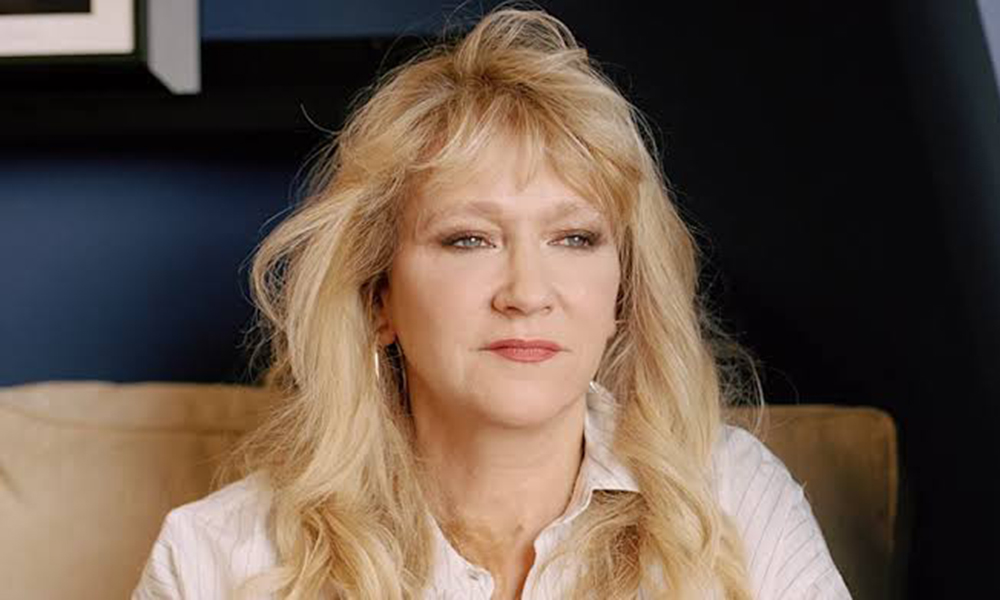
Sonia Friedman Credits Theatre With Saving Her as West End Influence Reaches New Heights
Sonia Friedman has become one of the most influential figures in international theatre, building a producing empire that stretches from London’s West End to Broadway. Yet her path to the top began without qualifications, professional connections or any certainty about where she belonged.
By the northern autumn, an estimated one in four productions playing in the West End will have Friedman’s involvement. Her current and forthcoming portfolio includes PADDINGTON THE MUSICAL, HARRY POTTER AND THE CURSED CHILD, STRANGER THINGS: THE FIRST SHADOW, ARCADIA and the breakout new play 1536.
Since Sonia Friedman Productions was established in 2002, the company has developed, initiated or produced more than 300 productions around the world. Those shows have collected 74 Olivier Awards, 62 Tony Awards and three BAFTAs, placing the company among the most decorated theatrical organisations of its generation.
The scale of that success is particularly remarkable given Friedman’s unconventional beginning. She left school at 16 without formal qualifications after a turbulent childhood marked by limited structure and parental supervision.
The youngest of four children, Friedman grew up in Totteridge, Whetstone and Islington. Her father, violinist Leonard Friedman, left the family soon after she was born, while her mother, a concert pianist, struggled to care for four young children. Much of Friedman’s upbringing was consequently left to her older siblings, including violinist Richard Friedman and performer and director Maria Friedman.
The siblings created their own entertainment, staging shows in which the young Friedman would appear. That early exposure to performance offered a sense of possibility, even as conventional education proved considerably more difficult.
Friedman moved through several schools, rebelled against authority and was expelled for truancy. She has said she avoided examinations because she had never learnt how to study. Those experiences continue to influence the way she recruits staff, with curiosity and a genuine commitment to theatre carrying more weight than academic credentials.
Her recent diagnosis of attention deficit hyperactivity disorder has given her a new understanding of those early struggles. Friedman believes the condition also helps explain the intensity with which she approaches her work, including her ability to hyperfocus, rapidly absorb information and move between a large number of productions.
She does not romanticise the condition, however. Friedman has experienced serious burnout twice, most recently following the pandemic shutdown. When theatres closed in 2020, she had 18 productions running, leaving her company to manage the abrupt suspension of shows, employment and investments across multiple markets.
Theatre nevertheless provided the structure that school and home had not.
After completing stage management training, Friedman began working professionally at 19. She later joined the National Theatre, where she worked across stage management, education, touring productions and theatre for young audiences. Her time in rehearsal rooms with writers including Harold Pinter and Athol Fugard helped establish her lifelong interest in new writing.
From 1989 to 1993, she worked as a producer at the National Theatre before co-founding the new writing company Out of Joint with director Max Stafford-Clark. She later joined the Ambassador Theatre Group and launched Sonia Friedman Productions in 2002.
Her company has since developed a reputation for moving between major commercial properties and challenging new work. Productions such as HARRY POTTER AND THE CURSED CHILD and STRANGER THINGS: THE FIRST SHADOW sit alongside plays from established writers and emerging voices.
Friedman rejects the suggestion that the modern West End has become overly dependent on adaptations, revivals and screen celebrities. While those projects remain an important part of the commercial landscape, she argues that London audiences are also embracing new writing and artists without established public profiles.
One of the clearest examples is Ava Pickett’s debut play 1536. Set in rural Essex as news of Anne Boleyn’s downfall spreads across England, the play follows three young women confronting the consequences of power, misogyny and violence within their own community.
The production transferred to the Ambassadors Theatre after a sold out season at the Almeida Theatre. Its success was driven by strong reviews, social media and audience recommendations rather than a celebrity cast, challenging the assumption that unknown writers require famous performers to attract West End audiences.
Friedman’s next major gamble will bring one of cinema’s most distinctive filmmakers into the theatre.
She is developing Quentin Tarantino’s first stage play, THE POPINJAY CAVALIER, in partnership with Sony Pictures Entertainment. Written and directed by Tarantino, the comedy is set in 1830s Europe and follows a theatrical story of deception, disguise and heightened romance inspired by classic swashbuckling adventures.
The production is currently planned to open in the West End in early 2027, following a period of development. Casting, dates and a theatre have not yet been announced.
Friedman has described herself as unexpectedly delighted by Tarantino’s script, praising its humour and affection for actors and theatre. Although the filmmaker is entering a new creative medium, she says he has read widely, attended West End productions and shown a strong interest in how a live audience experiences a story.
THE POPINJAY CAVALIER will arrive during a complicated period for commercial theatre. Audiences have returned strongly in London, but Friedman says production budgets have approximately doubled over the past decade as the costs of labour, energy, materials and operating venues have increased.
Those pressures are particularly serious for subsidised theatres, which must balance escalating expenses against a responsibility to keep tickets accessible. Friedman believes the commercial and subsidised sectors will need to collaborate more closely if Britain is to maintain a healthy pipeline of new artists and productions.
Broadway presents an even greater financial challenge. Friedman estimates that a play costing £1 million to mount in the West End can require almost six times the equivalent investment in New York. High operating costs, expensive tickets and the concentration of openings around the Tony Awards have made it increasingly difficult for new productions to find sustainable audiences.
Despite those concerns, Friedman remains optimistic about theatre’s future. She believes audiences are becoming younger and that social media has created new pathways for productions to generate excitement without relying entirely on traditional advertising or established stars.
Her strongest warning is directed not at producers, but at governments and education policymakers. Friedman is calling for drama to be restored as a meaningful part of school life and for more students to be given opportunities to attend professional performances.
“Theatre saved me,” she said, arguing that gathering children in a room to tell stories teaches them to express ideas, encounter opposing opinions and understand experiences beyond their own.
For Friedman, access to theatre is not simply about developing the next generation of performers or ticket buyers. It is about preserving places where communities can meet, disagree, imagine and recognise one another.
Her own journey, from an unsettled childhood and an interrupted education to an unprecedented position of influence, offers compelling evidence for that belief. Theatre did more than provide Sonia Friedman with a career. It gave her a place in the world, and she has spent the decades since creating that place for millions of others.