
Andrew Lloyd Webber Warns Rising Costs Are Threatening Broadway’s Future
Andrew Lloyd Webber has called for urgent industry reform following the early closing announcement for the Tony Award winning revival CATS: THE JELLICLE BALL.
The composer warned that Broadway’s escalating production and operating costs are making it increasingly difficult for artists and investors to support ambitious new work.
“The painful truth is that, with things as they are, bringing almost any new show to Broadway makes little financial sense,” Lloyd Webber wrote on social media on Tuesday 14 July.
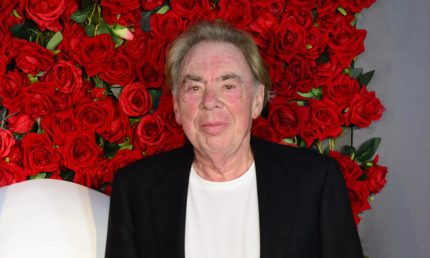
attended the premiere of the Phantom of the Opera, Madrid Spain
He said creators, writers and directors were frequently required to accept reduced royalties simply to have their work produced, while investors faced a limited chance of recovering their money.
“Without action, Broadway risks rivalling Hollywood’s empty soundstages,” he wrote, warning of a future filled with dark theatres where daring productions once played.
His comments followed the announcement that CATS: THE JELLICLE BALL will play its final Broadway performance at the Broadhurst Theatre on Saturday 8 August.
The acclaimed production opened on Broadway in April, following a successful Off Broadway premiere in 2024. Its closure after approximately four months has prompted concern among theatre workers and audiences, particularly given the production’s strong reviews, awards recognition and considerable cultural impact.
Directed by Zhailon Levingston and Bill Rauch, the revival reinvents Lloyd Webber’s 1982 musical through the traditions of New York’s ballroom community. The familiar gathering of Jellicle cats is transformed into an extravagant competition featuring houses, runway categories, judges and ballroom performers.
The production received nine nominations at the 2026 Tony Awards and won three, including Best Costume Design of a Musical for Qween Jean.
Despite its acclaim, CATS: THE JELLICLE BALL was unable to sustain the ticket revenue needed to meet the substantial weekly cost of operating a large Broadway musical.
The production recorded weekly grosses of approximately US$1 million during its stronger periods, but recent takings declined. The closing notice has renewed debate about whether apparent box office success is still enough to keep a Broadway production running.
Lloyd Webber said the financial structure was placing pressure on both emerging and established theatre makers. Many creatives, he argued, now rely on fixed weekly payments instead of receiving a meaningful share of a production’s long term success.
“How can the next generation build a life in theatre under those conditions?” he wrote. “Young creatives cannot live on goodwill alone.”
He also warned that investors were being asked to take increasingly significant risks, often with little prospect of recouping their initial contribution.
Without investors prepared to finance new productions, and without artists able to build sustainable careers, Lloyd Webber questioned where Broadway’s future musicals and plays would originate.
The composer recalled a conversation with the late director and producer Hal Prince, whose credits included THE PHANTOM OF THE OPERA and EVITA.
According to Lloyd Webber, Prince had become deeply concerned that Broadway was no longer a viable birthplace for genuinely original and adventurous work.
“One of the last things the great Hal Prince said to me was that it broke his heart to see what Broadway was becoming,” Lloyd Webber wrote. “I fear he was right.”
Lloyd Webber has experienced some of Broadway’s longest running commercial successes.
The original production of CATS opened in 1982 and played for almost 18 years. THE PHANTOM OF THE OPERA opened in 1988 and remained on Broadway for 35 years before closing in 2023.
His work has continued to feature prominently in New York theatre. Recent projects include the acclaimed revival of SUNSET BLVD., the forthcoming Broadway transfer of EVITA and MASQUERADE, an immersive reinterpretation of THE PHANTOM OF THE OPERA playing Off Broadway.
While long running productions such as THE LION KING and WICKED remain profitable, Lloyd Webber said Broadway could not depend indefinitely on a small number of established titles.
“Broadway cannot survive creatively or commercially on three old shows,” he wrote.
He argued that new work must be given a realistic opportunity to succeed, whether through traditional Broadway productions or alternative theatrical formats such as MASQUERADE.
The composer, who was closely involved in efforts to reopen London’s West End following the pandemic, called on Broadway’s producers, theatre owners and unions to work together on reducing costs and creating a more sustainable commercial model.
“I am still as in love with Broadway as I was as a teenager,” he wrote. “I want future generations to experience that same sense of possibility.”
Lloyd Webber said every part of the industry had an interest in finding a solution, with the future of Broadway’s artists, investors and theatres dependent on meaningful cooperation.
CATS: THE JELLICLE BALL will continue at the Broadhurst Theatre until its final performance on Saturday 8 August 2026.
Photo Credit: DepositPhotos.com