

Shake It Up: Amy Zhang on Feminine Movement, Self-Expression, and Challenging the Status Quo
There’s a phrase Amy Zhang uses to describe her life’s work that stops you in your tracks: shaking ass. And she means it.
The Chinese-Australian movement director and choreographer has made a career out of exploring feminine movement, and specifically the art of learning to dance in heels. What started as a personal obsession became something much larger — a community, a methodology, and an international reputation built on the radical, joy-filled, confidence-unlocking power of femme movement. She has watched it work on total beginners, professional dancers, and even celebrities. Every time, she says, it blows her mind.
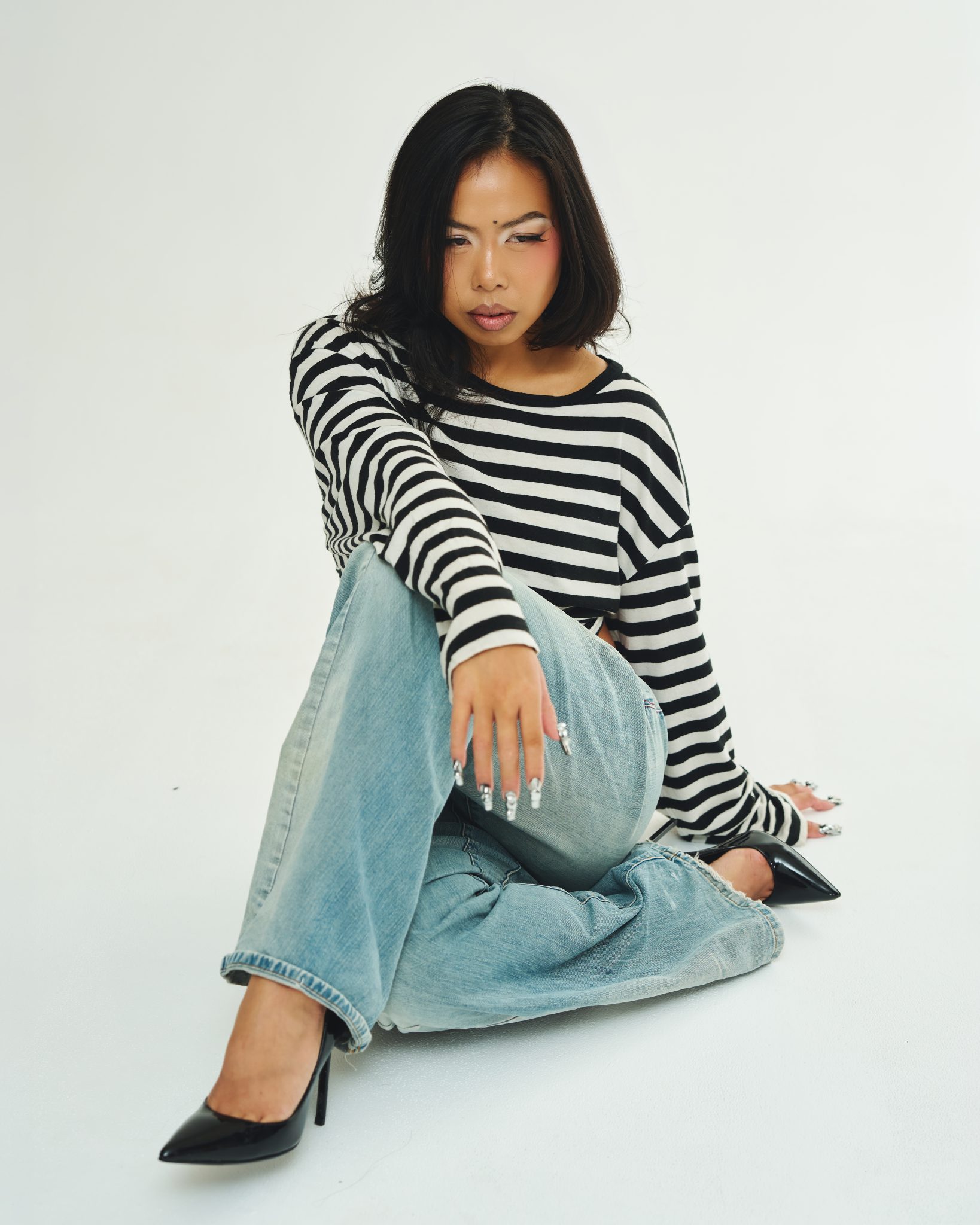
Amy has choreographed for global brands such as Hermès, Cartier, Nike and Calvin Klein, as well as artists including Rita Ora, The Veronicas and PNAU. Her work has been featured at Australian Fashion Week, on Channel 10, ABC, SBS and Nowness. She collaborated with Google to curate an AI dance app presented at the Google I/O annual developer conference in Los Angeles. In the arts space, she has worked with organisations across theatre and major galleries including the Hong Kong Museum of Art (M+), Art Gallery of NSW, Sydney Dance Company, QPAC, the Gallery of Modern Art (GoMA), Adelaide Fringe Festival, The Hayes Theatre and Belvoir St Theatre. Her dance theatre work, [gameboy], saw sold-out seasons at Sydney Dance Company as part of their INDANCE program — and she is the choreographer for the ARIA-nominated original musical The Lucky Country, created by Vidya Makan in collaboration with Sonya Suares. In the last year, her social media presence has exploded, reaching millions of views — with Tyla, SZA, Doechii, Addison Rae, Doja Cat, Victoria Monét and Summer Walker all publicly showing love for her work.
But behind the virality is a sharper point. Amy is acutely aware that the industry she’s making waves in — both here in Australia and internationally — is dominated by men. The biggest female artists in the world, she’ll tell you, are primarily taking their movement direction and choreography from cis-men. And as a woman who understands the power of femme from an actual lived femme experience, she’s built her entire point of difference around that gap. Her community exists to help people find confidence, freedom and self-expression. The vehicle, as always, is shaking ass.
“Shaking ass” is such a deliberately bold way to describe your work. Why was it important for you to own that phrase rather than soften it?
Amy: Because that’s exactly what my work is! But in all seriousness, particularly as women, we’re so often told to shrink ourselves and make ourselves palatable. We’re rarely encouraged to take up space, and I think it’s about time we changed that. From experience, when you learn to shake ass, something within you unlocks. It’s honestly quite hard to do and can feel very exposing. So when you do it, it changes the way you carry yourself, the confidence you have in your body, and the permission you give yourself to be seen. It’s honestly liberating.
How did you first realise that heels and feminine movement could be a vehicle for something deeper?
Amy: At the start of my dance journey, I was incredibly shy, lived in baggy clothing and run in the total opposite direction of anything stereotypically femininity or what would be traditionally seen as “sexy”. That definitely reflected in the styles of dance I trained early on. As I gradually opened myself up to feminine movement, and eventually heels, I realised how uncomfortable I actually was with femininity – and by extension, my own body. People often underestimate heels because they see the sexy aesthetic before they see the technique. It’s an incredibly athletic form. The strength, control and precision required honestly aren’t that different from ballet. But beyond the physicality, heels asks something else of you. It asks for confidence and a vulnerability that in other styles can normally be hidden by movement quality or technique. And even more so, it asks you to be comfortable with being perceived. The deeper I went into the style, the more I unlocked within myself. I realised heels gave me access to a type of confidence that no other dance style had. I’m still a little shy when you first meet me and I still wear a lot of baggy clothing but I’m definitely not scared of being feminine and will happily tell you that I’m hot. Heels has totally changed my relationship with myself.
You work across a huge spectrum—from total beginners through to professional dancers and celebrities. What’s surprisingly similar across all of them when it comes to feminine movement?
Amy: That almost everyone is scared of femininity. Whether it’s someone walking into their very first class or someone performing in front of a sea of people, that fear is surprisingly universal. We’re taught from such a young age to be careful about how much femininity we express because it can so easily be judged, sexualised or dismissed. After working with all walks of life, I’ve realised that we all just need a space that gives us the permission to walk, move and feel feminine. It’s truly healing.
You’ve pointed out that the biggest female artists in the world are largely being directed by cis men when it comes to movement. What’s actually being lost?
Femininity isn’t a dance move, it’s a lived experience. When movement is taught purely from observation rather than lived understanding, it can become performative. It might look feminine, but it doesn’t necessarily feel feminine. The essence isn’t there. There’s a larger conversation here about Ballroom culture and eternally giving thanks to the Black and Brown trans-women who have and continue to pave the way so we can all be in our feminine. But what I’ve learnt in my own journey, is that there’s a depth that comes from understanding what it actually feels like to exist in a female body. When that perspective informs choreography, the movement comes from within rather than being placed on top of someone. I think audiences can feel the difference, even if they can’t necessarily articulate why.
Have you ever been in a room where you felt the difference a female choreographer makes? What shifted?
Amy: All the time. There’s often an unspoken understanding of the female body that makes the translation of movement feel more natural. Dance is storytelling through movement, and so much of storytelling comes from shared lived experience. As women, there are countless moments we’ve collectively experienced that don’t need explaining. That shared understanding creates trust in the room and allows us to access a depth that would take much longer to find otherwise.
How does your Chinese-Australian background shape the way you approach femininity and movement?
Amy: I think the duality is really interesting. Traditionally, Chinese ideas of femininity tend to value restraint, grace and a more demure sensibility. But funnily enough, the Chinese women who raised me are all those things whilst still being some of the strongest, most opinionated and formidable people I’ve ever known. Then you throw in growing up in Queensland with a very laid-back Australian culture, and it creates this interesting melting pot. My femininity has always existed somewhere between my softness and strength, and I think that balance naturally shows up in my choreography.
Did going viral change how the industry treats you, or were you already operating at that level?
Amy: In some ways, it changed absolutely nothing. Many of my biggest career opportunities came long before I had any sort of online following. But at the same time, going viral has opened doors I never imagined possible. The internet has an incredible ability to collapse distance. Relationships that might have taken decades to build can now begin with one video reaching the right person.
What do you want the choreography industry to look like in ten years?
Amy: I want dancers to become household names. People often underestimate just how much goes into what dancers do. It requires extraordinary physical ability, musicality, cultural awareness, creativity, storytelling, collaboration and technical understanding. Making movement look effortless is one of the hardest things to do. With platforms like TikTok and the global rise of K-pop bringing dance further into the mainstream, I hope we’re moving towards a future where dancers are recognised in the same way musicians, actors and athletes are – not just as support acts or back up dancers, but as artists in their own right. I also want to see far more women choreographers at the top, leading the biggest stages, shaping the visual language of pop culture and being credited for the influence they already have.
To find out more about Amy Zhang and her work, visit her website.