Festival of Dangerous Ideas Unveils Full Program Lineup
Hatred, belonging, nationhood, conspiracy, morality, faith, evil and pluralism: Australia’s globally renowned Festival of Dangerous Ideas returns to Sydney from 20–30 August 2026 with world-leading speakers and an expanded cultural program that asks audiences to confront the complex, urgent and uncomfortable ideas shaping our world; all appearing live and in person.
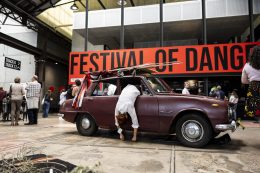
Presented by The Ethics Centre, the Festival’s 13th program will enliven Sydney for a newly extended 10 days of talks, world-premiere art, taboo film and behind-the-scenes excursions. The Festival brings together leading international and Australian thinkers, writers, artists, academics and changemakers to dig deeper into the biggest issues of today.
With the main Festival weekend (22-23 August) at Carriageworks, Sydney, the Festival extends across more venues than ever before; including Sydney Town Hall and major cultural institutions.
Introducing the 2026 program, Festival Director, Danielle Harvey :
We live in a world changing faster than our ability to make sense of it – one of overlapping crises, competing truths and profound uncertainty. The Festival of Dangerous Ideas is not interested in outrage for its own sake, or in voices that are shocking or mere opinion. What we seek is something rarer and, we believe, more valuable: the opportunity to sit with real complexity, to encounter ideas that resist easy answers and to confront the forces shaping our world that too often remain hidden in plain sight. The most dangerous ideas are not the ones that offend us – it’s the ones we are willfully ignoring.
Simon Longstaff, Executive Director of The Ethics Centre, presenter of the Festival:
Looking back across the 17 years and 13 iterations of this Festival, it is not that it has endured that especially thrills me. Instead, I am inspired by why (against all expectations) this should be so.
The fate of the Festival has always rested in the hands of our audience: a diverse mass of people who are willing, even eager, to lean into life’s greatest challenges. That appetite for honest inquiry – for ideas that provoke rather than comfort – is rarer than we might hope. It is an approach worth nurturing. The Festival of Dangerous Ideas exists to honour and realise that ideal.
Minister for Jobs and Tourism, Steve Kamper :
Critical thinking is the foundation of culture and creativity, which makes the Festival of Dangerous Ideas so important for Sydney’s cultural calendar. As the only festival of its kind in Australia, it brings together some of the brightest minds from around the globe for genuine discussion on the issues that matter most. Events like this define Sydney as not just the nation’s cultural capital, but its intellectual capital too.
Twenty highly-credentialed, international guests will present timely keynotes at this year’s Festival.
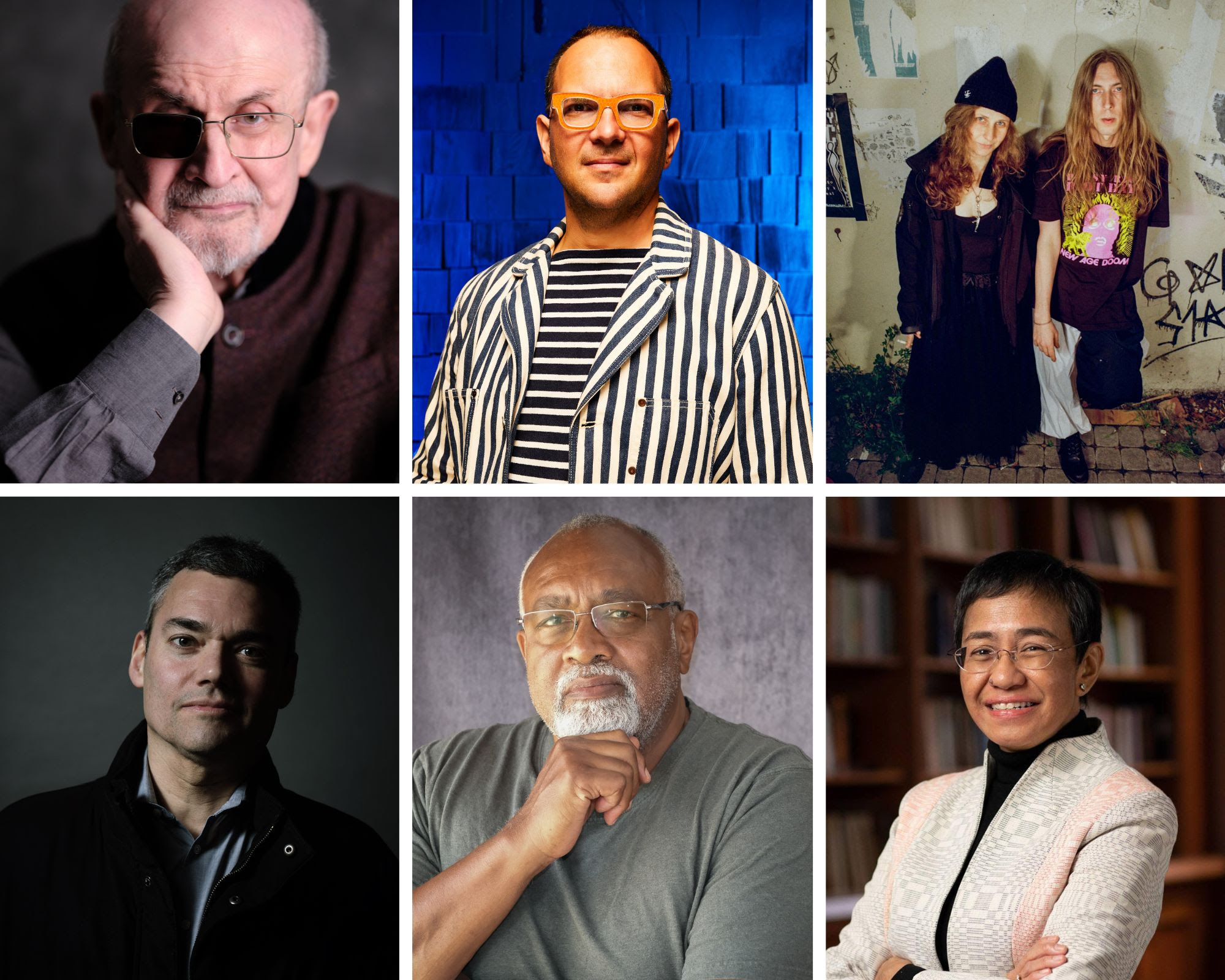
Previously announced, one of the world’s most consequential literary figures, Salman Rushdie, returns to Australia for the first time since the 2022 attack that profoundly reshaped his life and work, and 12 years after his last Festival appearance. Presenting the opening night, Rushdie’s keynote The Price of Ideas will explore censorship, identity, belief and the dangerous power of words. He will reflect on the violent reactions that ideas can provoke and the personal cost of defending free expression.
Hedwig and the Angry Inch creator and queer icon, John Cameron Mitchell, will present a ferocious, funny and unfiltered masterclass on ‘punk as action’, refusal and collective courage. Part provocation, part call to arms, the session invites audiences to stop playing it safe and embrace risk, noise and participation.
Acclaimed novelist and digital rights activist, Cory Doctorow, explores the dangerous concentration of tech power, surveillance capitalism and the fight to reclaim the internet from corporate control. Coining the term “Enshittification” – Australian Macquarie Dictionary’s word of the year in 2024 – his recent book of the same name explores how tech giants lure users in before degrading the platforms they depend on. More than naming the rot, Doctorow will set out a case for regulation, interoperability, privacy and tech worker power.
Artist and activist Maria Alyokhina of internationally-renowned feminist-art-punk group, Pussy Riot, will perform a work drawn from her recently-released memoir, Political Girl, with Eric J Breitenbach. Charting an extraordinary life of resistance, from her imprisonment after the group’s punk prayer protest to her 2022 escape from Russia (disguised as a food delivery courier), she presents a defiant portrait of authoritarianism, courage and the absurdity of state power.
Best-selling German-Dutch philosopher, Hanno Sauer’s, recent book, The Invention of Good and Evil, examines the evolution of morality and why understanding ethics through history may be key to navigating today’s fractured world. In a talk entitled After Equality, he will challenge the idea that a truly classless society is possible by tracing how status, privilege and hierarchy persist across history. From aristocracy to meritocracy, Sauer will argue that hierarchy is not a failure of civilisation, but one of its permanent features.
Filipino-American journalist and Nobel Peace Prize laureate, Maria Ressa, is the co-founder and CEO of Rappler, the top digital-only news site fighting for press freedom in the Philippines. She examines how disinformation, fear and outrage have become weapons against democracy. Drawing on her frontline work against digital authoritarianism – in which she endured constant political harassment and arrests by the Duterte government – in Weapons of Mass Distraction Ressa asks what happens when reality itself becomes contested terrain.
In his first trip to Australia, one of America’s most outspoken intellectuals, Glenn Loury, explores the subtle forces that shape what can and cannot be said. A Brown University economist who has spent decades challenging orthodoxies on race, inequality and free expression, Loury is one of the few public intellectuals willing to follow an argument wherever it leads – regardless of who it unsettles. He asks us whether social shame, professional risk and fear of cancellation are doing more damage to public discourse than formal censorship.
Peter Beinart is an influential political columnist and journalist for The New York Times and MSNBC, and a vocal commentator on Judaism and the Israel-Palestine conflict. Beinart will explore how the war in Gaza is reshaping Jewish identity and challenging liberal values. He will argue that the debate has moved beyond geopolitics into deeper spiritual, generational and existential questions. Beinart will also feature alongside Nick Bryant, Rosalind Dixon, Maria Ressa and Glenn Loury to ask if President Donald Trump is a symptom of deeper American malaise.
For decades, the Middle East has been explained to the West as a place doomed by tribalism, religious fanaticism and eternal sectarian conflict. The assumption runs so deep that coexistence now feels like an impossibility.
But what if the opposite is true? Palestinian-American historian, Ussama Makdisi, challenges one of the West’s most persistent assumptions about the Middle East, tracing histories of pluralism, coexistence and shared political life. In doing so, he reveals that the region’s fractures are not ancient inevitabilities, but the modern legacies of empire and occupation.
American psychologist, Jesse Bering, revisits the controversial work of psychiatrist Ian Stevenson, whose decades-long research into reincarnation, apparitions and near-death experiences challenged scientific orthodoxy.
An academic and science communicator who has devoted his career to examining why humans believe what they believe – from the existence of the soul to the persistence of magical thinking – Bering is uniquely placed to take Stevenson’s findings seriously without abandoning his critical perspective. Pure scepticism gives way to an existential reckoning with one of life’s most dangerous questions: what if death isn’t the end?
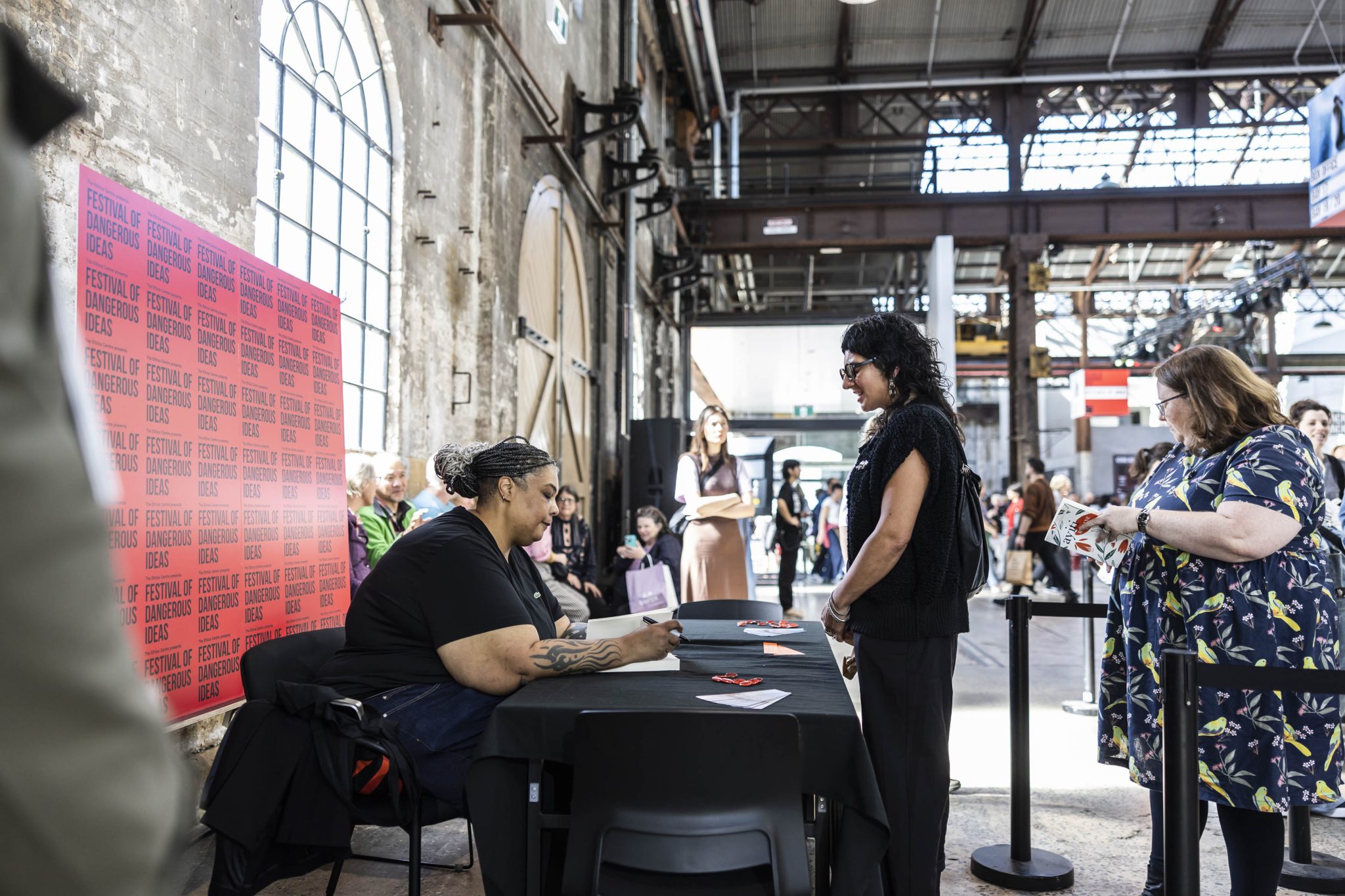
From poisoners and thieves to revolutionaries and killers, the figure of the “evil woman” has long unsettled the public imagination. With her new book, Five Evil Women, acclaimed British historian, Joanna Bourke,will explore the assumptions and stories we tell about female violence, human nature, cruelty, desire, and power. In doing so, Professor Bourke will reveal how fear and fascination have shaped the way societies define good and evil.
New Zealand-based, German investigative journalist and Cult Trip author, Anke Richter, appears across two Festival sessions exploring how dangerous ideas take hold. In the panel Trust Me, It’s a Conspiracy, Richter joins a panel of sharp minds to examine the line between paranoia and legitimate suspicion, Richter joins Australian Cult Survivors Network founding member, Laura McConnell, and Sarah Steel in How to Start a Cult. Together, they will unpack how the seductive pull of belonging, belief and control draws people into the orbit of wellness empires, spiritual leaders, online communities and political movements.
As authoritarianism grows in influence and the global rules-based order fractures, Human Rights Watch Executive Director, Philippe Bolopion (France), asks what happens when the institutions designed to protect human dignity come under strain. His session examines human rights ‘hotspots’ across the world. He argues that the future of freedom depends on the will and capacity of democracies and civil society to fight for rights.
Philosopher, Alexandre Lefebvre, joins Hong Kong and Taiwanese American journalist, Melissa Chan,and Palestinian-American historian, Ussama Makdisi, to examine what people find attractive in authoritarian regimes. What do they ‘get right’ in comparison with the messiness of liberal democracies?
Leading Australian voices taking to the stage include author and former Prime Ministerial speechwriter, Lucinda Holdforth, who draws on her latest book to examine the social, economic and political costs of longer lives and ageing populations.
Former Prime Minister Malcolm Turnbull, Foreign Minister, Bob Carr, and former officer in the Australian Army and Royal Australian Air Force, Catherine McGregor, will explore what it means to be sovereign country in a dangerous world. Special Envoy, Aftab Malik, will invite audiences to radically reframe their understanding of Islam, moving beyond fear and distortion to consider its civilisational legacy, its critique of the West and the resources it offers in support of Western civilisation. And Stan Grant joins Jess Hill and Peter Singer in a roundup of provocative thinkers who have been asked to diagnose society’s ills and prescribe the cure.
Award-winning writer, Richard Flanagan, will present a new essay written exclusively for the Festival, arguing that writers have a vital role to perform in an age of conformity, fear and intellectual retreat. Author and public intellectual, Clive Hamilton, traces how a world shaped by nationalist rivalry and authoritarian worldviews is undermining global climate action, asking whether humanity can still summon the collective will to survive.
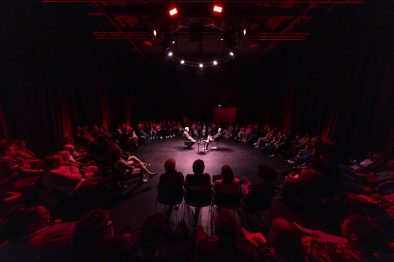
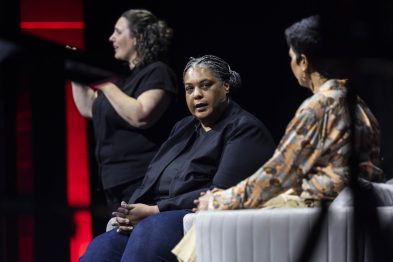
Across the Festival’s opening weekend, panels and conversations will bring keynote speakers together with leading Australian and international thinkers and changemakers for more urgent, expansive discussions on the ideas shaping public life.
- Nobody Belongs // Jesse Bering, Kate Holden, Amy Thunig-McGregor and Neha Kale // Maybe some people were never meant to be included
- Paranoid Nationalism // Ghassan Hage, David Lesser and Marcia Langton // Why our empathy is killing our nation
- The Witches // Lucianne Tonti, Emma Quilty and Caroline Tully // Magic as the only logical response to a broken world
- Against Goodness // Jesse Bering, Joanna Bourke and Hanno Sauer with Sisonke Msimang // The dangers of moral certainty
- The Last Humans // Cory Doctorow, Eleanor Gammell and Toby Walsh // What if the biggest threat isn’t artificial intelligence, but belief in it?
- Hurt, Harm, Hate // Sami Shah, Antoinette Lattouf, David Slucki, Luke McNamara and Robynne Quiggin // Emotional jurisprudence
- You Must Take Part in Revolution // Melissa Chan and Badiucao // A near-future dystopian reckoning, with pictures
- Buying and Selling the Poor // Rick Morton, Mark Considine and Emily Roy // Helping the poor is very good business
- Governing in the Age of Stupid // Greg Sheridan, Amy Remeikis and Waleed Aly with Hannah Ferguson // Why liberal democracy feels stuck
- Killing Culture // Salman Rushdie, Maria Alyokhina, John Cameron Mitchell and Brook Andrew with Sisonke Msimang // Is truly dangerous art still possible
- Bad Education // Kylie Moore-Gilbert, Pasi Sahlberg and George Williams // What is learning for?
Porn Without People // Pat Stokes, Dan Miller, Emily van der Nagel and Tilly Lawless // The end of consent - On Antisemitism // Ruth Balint, Sarah Schwartz and David Slucki // Antisemitism never disappears. It reinvents itself
- Decolonisation Is Not an Economic Policy // Duane Fraser, Celeste Liddle and Glenn Loury // Can we decolonise in a capitalist world?
- The Illusion of Neutrality // Patrick Abboud with Tim Dean // Is claiming neutrality the most dangerous lie in public life?
For the full lineup of talks and workshops visit the Festival website.
Beyond its Talks program, FODI 2026 expands its traditional programming across three major streams:Dangerous Art, Dangerous Films and Dangerous Excursions. Together, they bring the Festival’s ideas into visceral, cinematic and real-world encounters: from major new commissions and immersive performance to morally charged cinema and exclusive behind-the-scenes access to some of Sydney’s most significant cultural institutions.
On the expanded program and new formats Festival Director, Danielle Harvey:
“Dangerous ideas can be examined in many ways. Some demand debate, others require art, film or direct experience. All demand tension and attention. As the appetite for ideas continues to grow, these new streams allow us to explore more of the questions, disruptions and possibilities shaping our world, and to do so in ways that move beyond the spoken word.”
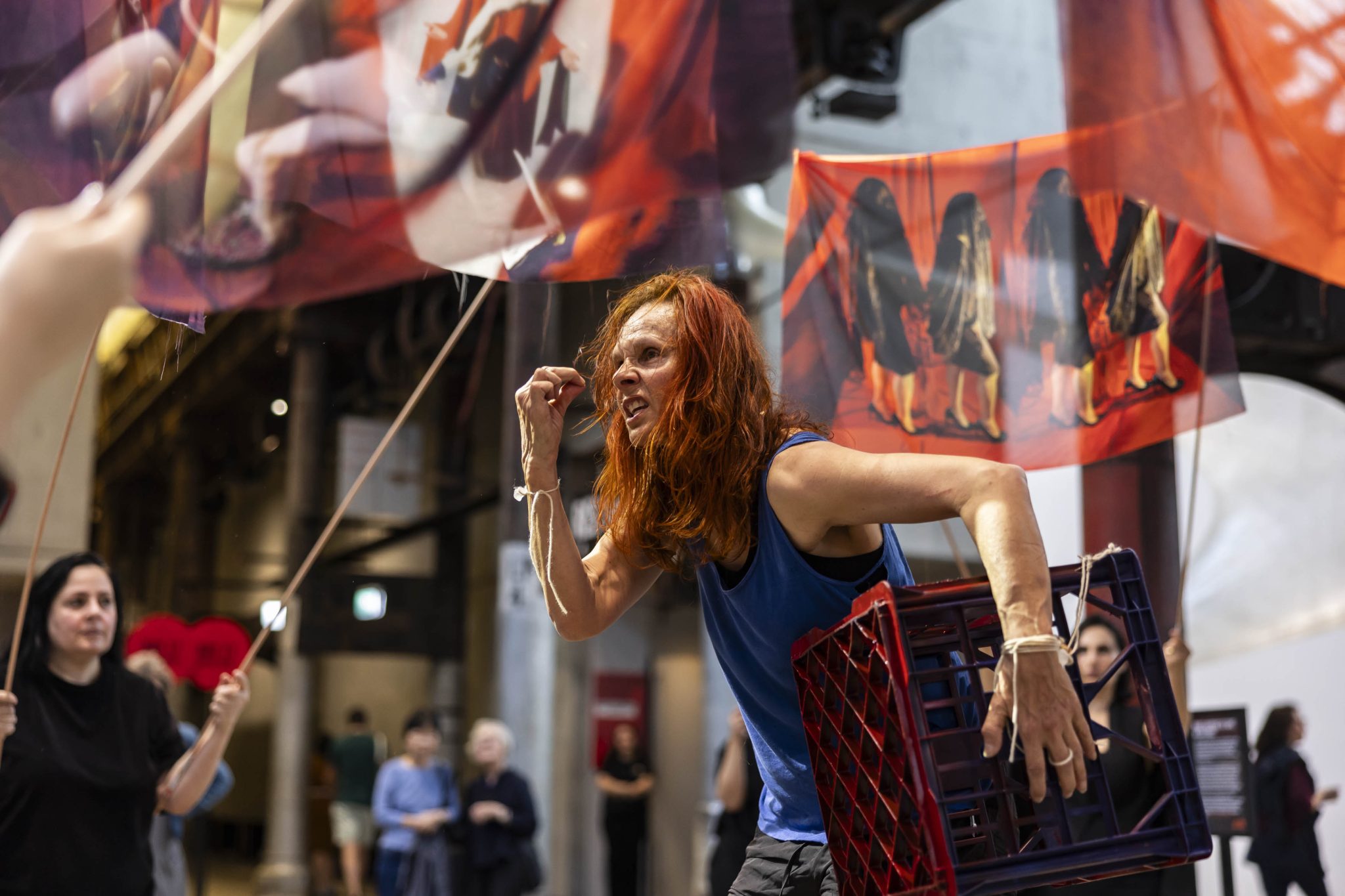
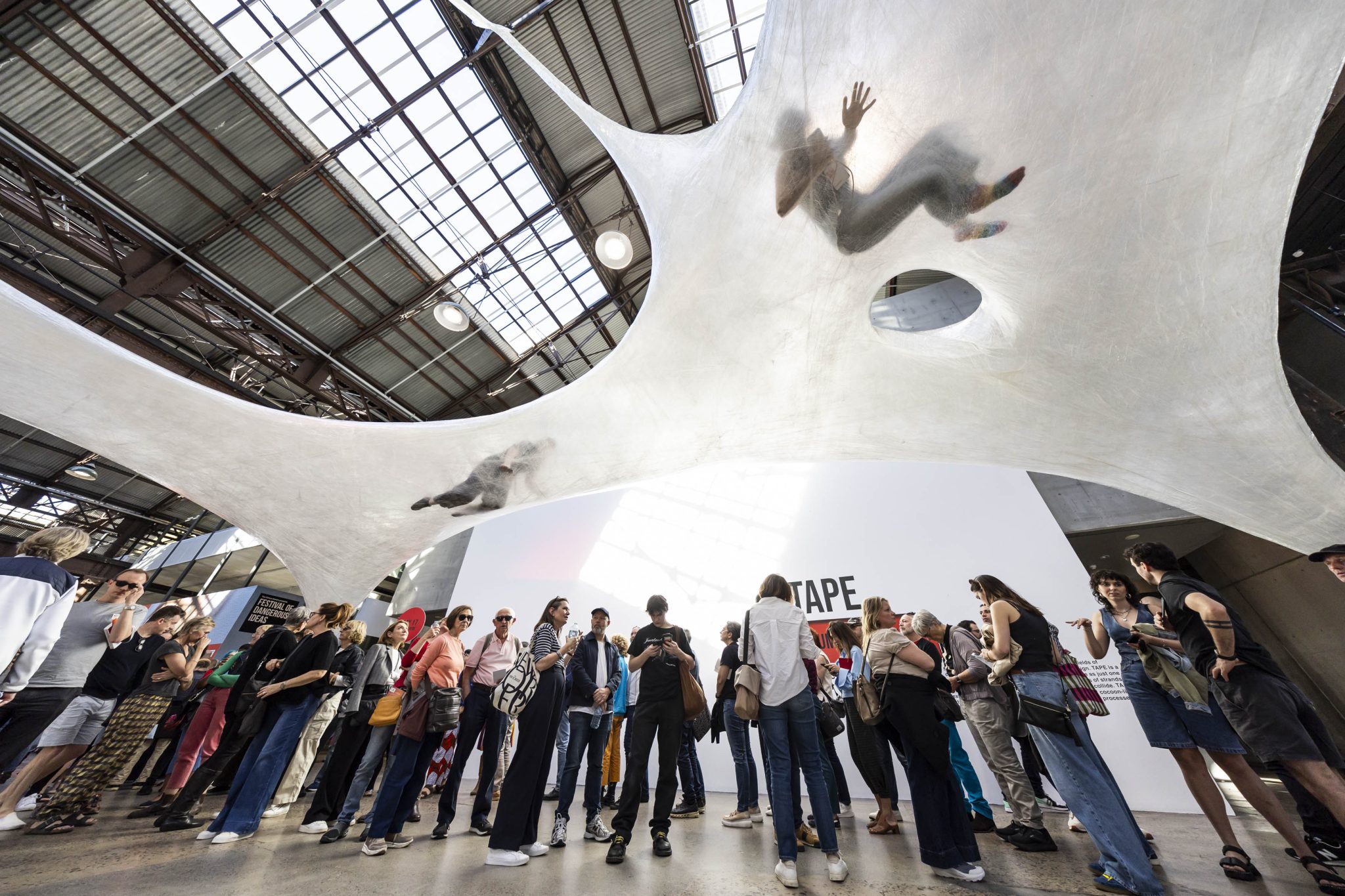
Dangerous Art: Bold Ideas Made Real invites audiences into works that use story, sound, movement and sensation to make ideas physical. From endurance performance and immersive digital chaos to participatory ritual, VR documentary and intimate theatre, the program asks audiences not just to think differently, but to feel the force of the ideas under their skin.
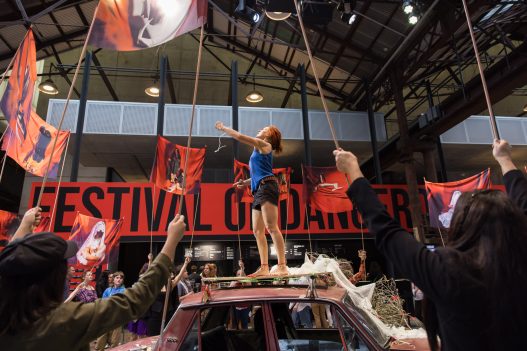
- A major world premiere, HEAP will transform the Carriageworks foyer into a vast landscape of earth, excavation and discovery. Part installation, part archaeological dig, the monumental new commission sees punters step barefoot into the dirt to unearth dangerous ideas concealed as artworks by eight leading Australian contemporary artists. The new works by Brook Andrew, Aretha Brown, Keg de Souza, Tarryn Gill, Sophie Penkethman-Young, Tim Silver, EJ Son, and HOSSEI explore themes of digital labour, sovereignty, environmental collapse, the imagery of war, lost Indigenous knowledge, loneliness, humility and healing – coming together in an unruly group exhibition that embraces friction, contradiction and unexpected encounters;
- Premiering in Sydney after a successful Melbourne run is Branch Nebula’s Exposure: an ugly-beautiful endurance work by acclaimed performance artists Latai Taumoepeau and Mirabelle Wouters. Set inside a landscape of domestic waste, labour and collapse, the work plunges the ageing female body into systems of power, extraction and environmental instability in a visceral theatrical experience that is impossible to look away from;
- Sarah Aiken and Rebecca Jensen’s Deep Soulful Sweats also makes its Sydney debut, bringing audiences together in an ecstatic, inclusive and unrehearsed ritual of sweat, movement and collective release. Guided by the zodiac and driven by choreography, chanting, absurdity, magic and fantasy, the work is part rave, part workshop and all release;
- In another Sydney premiere, FAKE by Mark Haslam and kdmindustries, offers an immersive descent into digital chaos where drum and bass collides with performance art. Drawing on AI hallucinations, conspiracy theories, scams, misinformation, political extremism, live web scrapes and audience input, FAKE drops audiences inside the internet’s collective subconscious in a volatile, high-intensity assault on truth itself;
- The World Came Flooding In by Isobel Knowles and Van Sowerwine is an immersive installation and experiential VR documentary that transports viewers into intimate stories of life during natural disaster. Through the real-life memories of Marina, Antoinette and Tom, the work uses cutting-edge storytelling technologies to explore home, place, identity and the waters that reshape them. The work comes to the Festival following critically-acclaimed runs in Melbourne and Rotterdam;
And Also With You by Simon Vaughan presents a one-person church service about faith, doubt and the long way out. Drawing on his own experience growing up in the church before walking away, the work moves through youth camps, purity pledges, original sin and the complex emotional residue of leaving certainty behind; - The Festival brings back The Last Supper, an intimate dining experience that seats festivalgoers alongside some of the Festival’s big thinkers. Across shared plates, drinks and provocations, each course becomes an invitation to debate, disagree and access the kind of greenroom conversations that rarely make it to the stage.
- The Festival also ventures into music with Meltdown, a one-night punk eruption of pure sonic release – fast, loud and gloriously unhinged at Heaps Normal Health Club Marrickville. More music at Carriageworks includes the psych rock duo Joe Wilson and Chanelle Collier who created Farewell Tour, a cathartic response to grief, where every song will be their last.
Dangerous Films: Old Reels, New Revelations presents a program of destabilising, provocative and critically-acclaimed cinema that treads the fault lines of morality, taboo and the cinematic form presented at Dendy Newtown.
Introduced by leading scholars, the program invites audiences to watch through a new lens, with films including Leos Carax’s Holy Motors, Ishirō Honda’s Gojira (Godzilla) Jane Campion’s The Piano, Pier Paolo Pasolini’s Salò (120 Days of Sodom), Kathryn Bigelow’s Zero Dark Thirty, John Cameron Mitchell’s Shortbus, and documentaries: Mitzi Goldman’s Hatred, Pat Fiske’s Rocking the Foundations, and Alex Gibney’s Knife: The Attempted Murder of Salman Rushdie.
Dangerous Excursions: Forbidden Access opens the doors to forbidden rooms, hidden collections and difficult truths across Sydney’s cultural institutions. Taking place inside storage stacks, archives, labs, collection spaces and behind-the-scenes areas rarely seen by the public, these exclusive excursions invite audiences to encounter objects and stories that provoke disclosure, discomfort and dissent, not just curiosity.
- Stacks of Danger takes audiences underground and after dark into the State Library of NSW’s hidden storage stacks.
- Afterlives, Interrupted at the Chau Chak Wing Museum explores the ethical responsibilities surrounding four ancient Egyptian individuals held far from home.
- Preparing for Extinction goes inside the National Herbarium of New South Wales and PlantBank’s seed vaults to reveal high-stakes conservation in action.
- Copy, Paste, Profit at the Caroline Simpson Library at The Mint uncovers the colonial appropriation and commercial profiteering woven through histories of Indian design.
- Holding Hatred offers rare access to objects too disturbing for regular public display at the Justice and Police Museum.
- Off the Record goes behind the scenes of the ABC Ultimo Centre’s vast audio-visual archive in an age of AI-generated reality.
- The Living Archive reveals how 200 years of collecting is helping scientists respond to climate change, biodiversity loss and extinction in the restricted areas of the Australian Museum Research Institute.
Other highlights include a banned book club hosted by writer Benjamin Law, and a series of hands-on workshops at The Ethics Centre.
The Festival is presented by The Ethics Centre, a not-for-profit that encourages people to examine all aspects of life. FODI is supported by the NSW Government through Create NSW and Destination NSW and its returning principal partner is JobLink Plus.
For more information click HERE