
So… Who are the Tonys for, anyway?
Watching the Tony Awards from Melbourne on a public holiday morning is a particular kind of experience. The ceremony arrives at an hour that’s neither quite breakfast nor lunch, glamorous and slightly unreal, and you find yourself watching an artform you genuinely love work very hard to remind the rest of the world that it exists.
The host was P!nk — physically extraordinary, clearly game for anything, and… someone whose career has been built entirely outside of theatre. The opening number set the tone, and not entirely in a good way. Where previous Tonys ceremonies have opened with original compositions written specifically for the occasion, this year’s was a lyrical rewrite of “Lady Marmalade” performed alongside Broadway cast members. Her affection for the form is genuine, and her music features in both Moulin Rouge! and &Juliet — but when P!nk asked why she’d been offered the gig, CBS told her plainly: they wanted more viewers. The Tonys, Broadway’s most prestigious night, are being programmed like a ratings problem.
The season underneath the ceremony is where the real story lives. The 2025–2026 Broadway season was the highest-grossing in history at $1.9 billion, yet included only six new musicals — down from more than a dozen in each of the two previous seasons. Best Musical had four nominees instead of the usual five. Of those six new shows, five were adapted from existing screen properties.
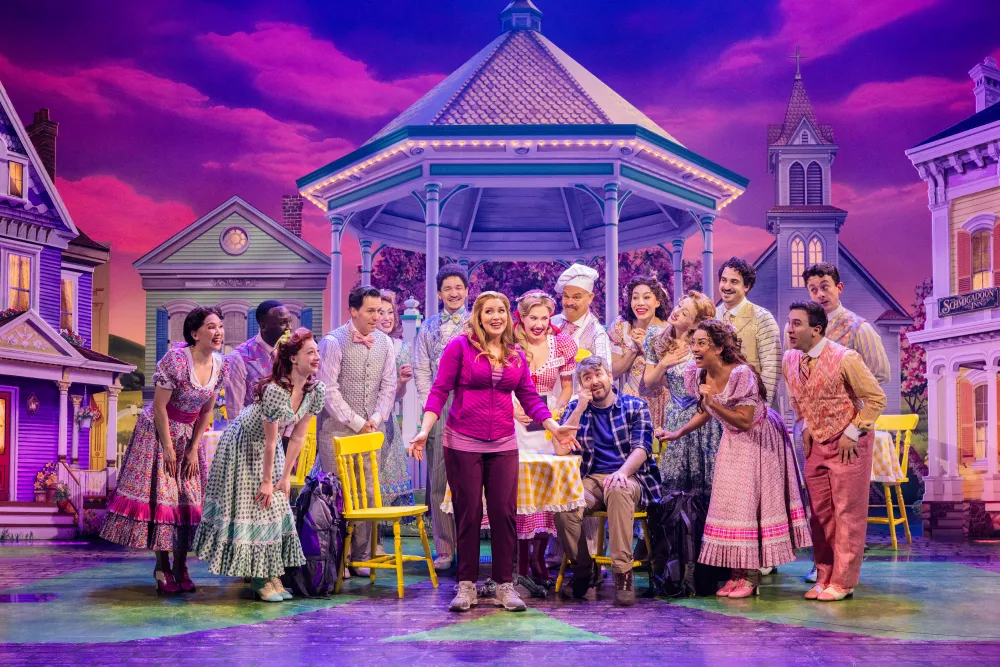
The winner was Schmigadoon! — and as someone who adored the TV series, I understand the appeal completely. Cinco Paul’s writing is sharp, and there’s something genuinely touching about a show that loves musical theatre enough to write an entire musical about it. In fact, the Apple TV+ series was the detour, as Paul originally conceived Schmigadoon! as a stage musical over 25 years ago. In that sense, the Tony win feels earned. But zoom out and the category tells a different story. Alongside Schmigadoon! sat The Lost Boys (the 1987 vampire film), Titanique (a Céline Dion jukebox musical grafted onto Titanic), and Two Strangers (Carry a Cake Across New York) — an original show that, by all accounts, charmed everyone who saw it. Shows like Beaches and The Queen of Versailles, which also brought wholly original scores to Broadway, didn’t even make the nominations list.
The play categories offered more genuine cause for excitement. Bess Wohl’s Liberation won Best Play, making her only the fourth female playwright in Tony history to take that award, which is a real cause for celebration and a quiet indictment of how slowly the industry moves. Ragtime, which was largely passed over when it first opened in 1998, finally received the revival recognition it deserved. Cats: The Jellicle Ball — a reimagining of the Andrew Lloyd Webber show through the lens of drag ballroom culture — won three awards, which suggests that when Broadway takes a genuine creative swing at existing material, the voters notice. The Rocky Horror Show went zero from nine nominations, which is its own kind of camp tragedy.
But the question that lingers longest from the other side of the world is what this means for theatre beyond New York. Broadway functions as a de facto model for commercial theatre globally: what gets produced, what gets rewarded, what eventually lands in the touring circuit that reaches Australian stages all flows downstream from here. The homogenisation of what gets made, the shrinking space for original work, the assumption that audiences need a recognisable title before they’ll buy a ticket. And we feel all of that here too.
The money is undeniably good news for an industry still in pandemic recovery. But financial health and creative health are not the same measure, and a season in which so few genuinely new musicals reached Broadway deserves scrutiny alongside the celebration. The Tonys this morning were entertaining, occasionally moving, and very good at performing Broadway’s importance. Whether Broadway is currently earning that importance is a slower, harder question.